From Warhol to Lichtenstein, Cascade Virtual Academy Kept Students Engaged Over Winter Break with Virtual Art Lessons Inspired by the Greats
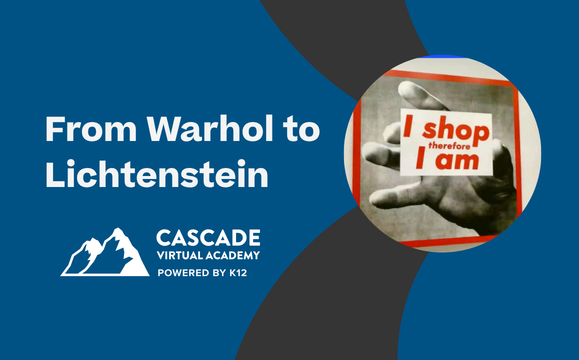
While many students across Oregon stepped away from schoolwork during winter break, Cascade Virtual Academy (CVA) took a different approach; one rooted in creativity, connection, and inspiration. CVA offered K–12 students a special, optional series of virtual art lessons designed to keep learners engaged beyond the traditional school calendar.
Led by online educator, Mar Ross, 62 students joined the winter-break sessions, which brought modern and contemporary art directly into students’ homes across the state through accessible, standards-based instruction. Rather than pausing learning entirely, CVA used the winter break as an opportunity to give students structured opportunities to explore creativity at their own pace while staying connected to their school community and peers.
Turning Winter Break into a Creative Opportunity
The virtual sessions introduced students to influential artists including Andy Warhol, Roy Lichtenstein, Mark Bradford, Kara Walker, Barbara Kruger, and Marcel Duchamp. Lessons were tailored by grade level and paired with simple, at-home projects that encouraged experimentation without requiring specialized supplies.
High school students explored Mark Bradford’s use of found materials by creating their own “junk journals,” learning how everyday objects can be transformed into meaningful art. Middle school students studied Barbara Kruger’s bold, text-driven style and designed location-based slogan art that blended visual design with critical thinking. Younger K–5 learners dove into Andy Warhol’s Pop Art techniques, practicing repeated-object drawings using contrasting and complementary colors.
Accessible Art for Every Student
In total, 62 students participated in the winter-break sessions. Ms. Ross noted that students responded especially well to lessons that incorporated technical skills, including one-point perspective, taught alongside the Barbara Kruger unit.
All projects were intentionally designed to use basic materials students already had at home, ensuring that geography or access to supplies would not limit participation. The goal was to make art education inclusive and achievable for every learner, regardless of where they lived.
Building Confidence, Creativity, and Future Pathways
For Ms. Ross, the purpose of the sessions went far beyond filling time during a school break. She emphasized the importance of helping students see creativity as something accessible and relevant to their lives. One particularly meaningful moment came when a high school student shared that they are currently applying to college art programs and that the winter-break course helped them actively build their portfolio.
Through these winter-break art sessions, CVA demonstrated how flexible learning models can extend education beyond the classroom calendar. By blending creativity, accessibility, and inspiration, they showed that even during a school break, students can stay engaged, expressive, and connected through art
Back to BlogRelated Blog Posts

Student Spotlight: Alysson Shines in Construction...
At Cascade Virtual Academy, students are building their futures—literally! It certainly was a game changer for […]
Student Spotlight: From Classroom to Championship, How Online...
Meet Skyler, a bright and adventurous 4th grader at Cascade Virtual Academy. Unlike most kids her […]

A Passion for Teaching and Making a Magical Difference with...
At Cascade Virtual Academy, passionate educators shape the future of students by providing engaging, tailored instruction. […]