
Ancient Stories, Modern Screens: Inside Cascade Virtual Academy’s Popular Mythology and Folklore Course
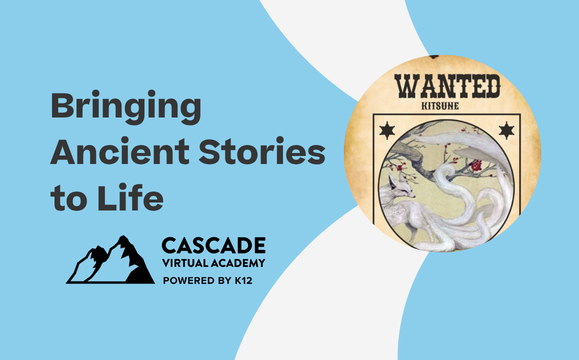
From the tragic flight of Icarus to the fantastical creatures of Pokémon, mythology and folklore are everywhere, even if students do not always realize it at first. At Cascade Virtual Academy (CVA), a new middle and high school elective is helping students uncover those connections and see how ancient stories continue to shape modern culture.
New Opportunities to Learn
This school year, CVA introduced a Mythology and Folklore elective that has quickly become one of the school’s most popular offerings. The eight-week virtual course blends classic myths, global folklore, pop culture references, and real-world analysis into a discussion-driven experience that feels far from traditional humanities instruction.
The course was developed by first-year CVA teacher Elizabeth Johnston, who says the opportunity came together naturally. When she joined the school, acting principal Mitch Page offered a short list of electives and asked what she would like to teach. Drawing on her background in world literature, Ms. Johnston saw the chance to bring a long-held passion into the virtual classroom.
Because the course is intentionally fast-paced, students explore a wide range of cultures rather than focusing on a single tradition. Over the term, students study Greek and Anglo-Saxon mythology, Japanese and Native American folklore, modern North American legends, German folklore, and more.
Ms. Johnston carefully balances mythology and folklore throughout the course. She often connects ancient stories to media students already recognize. Discussions regularly examine how classic folktales and mythic archetypes have influenced modern franchises, including Pokémon, helping students recognize storytelling patterns that span centuries.
Hands-On Projects in a Virtual Classroom
The virtual format also opens the door to creative, hands-on projects that might be more difficult to execute in a traditional classroom. One recent assignment asked students to design a “wanted poster” for a Yokai, a mischievous spirit from Japanese folklore. Students researched historical depictions, analyzed the character’s traits, and combined visual design with written storytelling. Ms. Johnston notes that the online setting makes it easier for students to access authentic historical artwork and incorporate those references directly into their projects.
“Sometimes writing assignments can get a little monotonous,” Ms. Johnston said. “Because of the online setting, it’s much easier to set up creative assignments like this, and students can pull real, authentic paintings from historical sources to use as reference.”
Student engagement has been one of the most rewarding outcomes of the course. Many students have expressed strong interest in specific mythological traditions. They eagerly share their passions during class discussions and projects. For Ms. Johnston, that enthusiasm has been especially meaningful as a new teacher, reinforcing the impact of allowing students to explore content that aligns with their interests.
What’s Next
Looking ahead, Ms. Johnston hopes to expand the course in the future by adding a second section, giving students more time to dive deeper into the texts, themes, and cultural connections that resonate most with them.
Students at CVA access this elective as part of an online learning model designed to support both academic success and personal interests. That versatility allows students to bring their passions into the classroom, encouraging deeper discussion, stronger engagement, and a greater sense of ownership over their learning.
By blending ancient myths with modern media, CVA’s Mythology and Folklore course shows how virtual classrooms can reimagine humanities education, proving that stories written centuries ago still have the power to captivate, challenge, and inspire today’s learners.
Back to BlogRelated Blog Posts

Student Spotlight: Alysson Shines in Construction...
At Cascade Virtual Academy, students are building their futures—literally! It certainly was a game changer for […]

Student Spotlight: From Classroom to Championship, How Online...
Meet Skyler, a bright and adventurous 4th grader at Cascade Virtual Academy. Unlike most kids her […]

A Passion for Teaching and Making a Magical Difference with...
At Cascade Virtual Academy, passionate educators shape the future of students by providing engaging, tailored instruction. […]