
Mixing, Measuring, and Making Friends: Inside CVA’s Beloved Online Baking Club
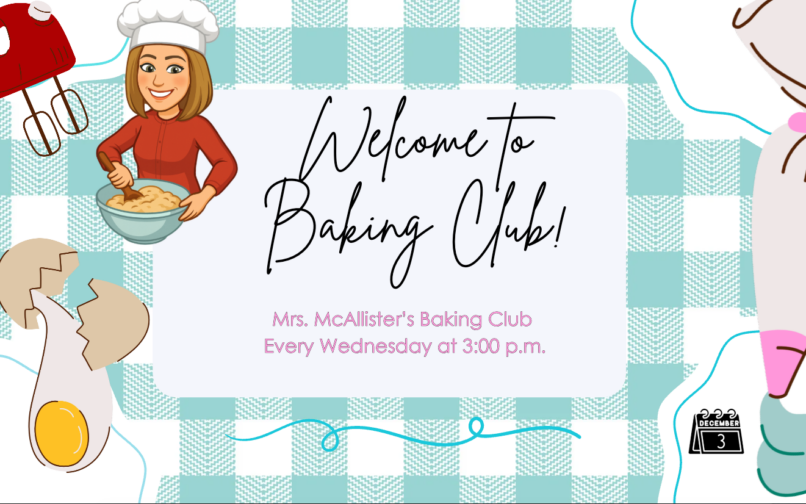
What started as a simple classroom reward has grown into one of the school’s most meaningful community-building traditions: a virtual Baking Club that now brings together middle school students from all corners of Oregon.
Now entering its third year, middle school teacher Ms. Jolynne McAllister leads the Baking Club, which meets weekly online. Students in 6th, 7th, and 8th grade log in from their own kitchens to bake together in real time. The students follow along as McAllister guides them step-by-step through each recipe.
The Start of the Baking Club
The club began as a small incentive to celebrate students’ hard work in class. Ms. McAllister originally invited a handful of her own students to join, never expecting it to grow beyond that initial group. But word traveled quickly. Soon, students from other classes asked to join, and the Baking Club expanded organically into a school-wide community. Today, more than 20 students participate each week, with many returning year after year since the club’s earliest sessions.
During each meeting, laptops are angled toward countertops and ovens as students mix, pour, and bake together. Ingredient lists and instructions are shared ahead of time, often sprinkled with funny baking puns and pop culture references to keep things light and engaging. As the session unfolds, students ask questions, compare techniques, and hold their creations up to the camera to check textures, consistency, or doneness.
The experience often extends beyond just student participation. Parents and siblings frequently join in, turning Baking Club into a shared family activity. In some households, siblings across different grade levels bake side-by-side, creating a moment of connection that reaches beyond the virtual classroom.
Learning with Growth Mindset
At the heart of the club is a growth mindset that Ms. McAllister models every week. She regularly reminds students that it is okay if a recipe does not turn out perfectly the first time, emphasizing that each bake builds skills, confidence, and resilience.
“It’s ok to make mistakes, we learn from them, and the next time you make a bake it’s going to be better. You’ll learn from it every time,” she said.
The Baking Club also blends creativity with academics in subtle but meaningful ways. Students begin with approachable recipes and gradually work their way up to more advanced challenges, from custard-based pies to Tanghulu, a delicate candied fruit dessert that requires precision, patience, and problem-solving. Along the way, Ms. McAllister weaves in lessons on math, fractions, budgeting, nutrition, and even plating and presentation. Students vote on photos of finished dishes, exchange recipe ideas, and are currently working toward creating a shared recipe book.
Making Connections Through Food
More than anything, the club has become a powerful connector in an online school environment. Students wait for one another to finish baking, cheer each other on, and form friendships that extend beyond the kitchen. Teachers and administrators have even joined sessions to share family recipes, this gives the students a rare opportunity to connect with school leaders in a personal and memorable way.
Ms. McAllister also encourages experimentation and confidence, urging students to add their own twists and see what happens. Sometimes those experiments lead to unexpected successes, reinforcing the idea that creativity and curiosity are just as important as following instructions.
As the Baking Club continues to grow, Ms. McAllister hopes every student who wants to participate will have the opportunity. The goal is not to create professional bakers, but confident, connected learners who understand that community, creativity, and meaningful learning can happen anywhere, even through a laptop screen set on a kitchen counter.
Back to BlogRelated Blog Posts

Student Spotlight: Alysson Shines in Construction...
At Cascade Virtual Academy, students are building their futures—literally! It certainly was a game changer for […]
Student Spotlight: From Classroom to Championship, How Online...
Meet Skyler, a bright and adventurous 4th grader at Cascade Virtual Academy. Unlike most kids her […]

A Passion for Teaching and Making a Magical Difference with...
At Cascade Virtual Academy, passionate educators shape the future of students by providing engaging, tailored instruction. […]